Denmark, along with other Nordic countries, has been holding top position in a gender equality rankings. These countries not only are trying to raise equality for women, but for both genders through equal maternity/paternity benefits. There are mandatory benefits for both maternity and paternity leave. "This concept illustrates efforts for true gender equality rather than a one-sided effort to bolster women’s standings within society." (http://www.equalityforher.com/) Laws in Denmark guarantee equal pay for equal work, and women have and use a legal recourse if they feel discriminated against.
 |
| http://www.equalityforher.com/ |
Women hold all of the Danish government's top jobs, with no men being head of the parties in the government. After 2013 Danish government requires big companies to set an aim for how many women they want to have in management. These companies also have to develop plans on how to get more women into the leadership. However, companies are not obligated to take any actions in this direction. Danish industry opposes quotas, and thinks that new rules will result with better gender equality rates through voluntary means. "The government does expect, however, that because companies are asked to highlight what they are doing to further gender equality, those who do nothing will be exposed and this will motivate more to take action to get more women into leadership positions." (http://www.nordiclabourjournal.org/)
 |
| http://commoncausezambia.org/ |
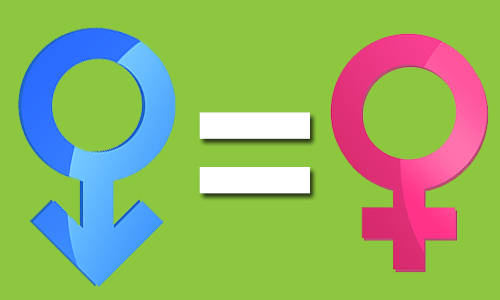
Gender inequality, however, is not only applies to women population. Denmark also is currently trying to solve a problems men in the country are facing.
Men have lower education, suffer from more lifestyle illnesses and struggle more during a divorce or their spouse's death. Government cooperated closely with local authorities and others to focus on the challenges met by men and boys and try to find a solution.
 |
| http://www.posterfortomorrow.org/ |
"The government also wants municipalities to better adapt their public services to reflect that the two sexes do not always have the same needs and do not always behave in the same way." (http://www.nordiclabourjournal.org/)
There are four main acts focusing on gender equality:
- Act on Equal Pay (2006, first introduced in 1973);
- Equal Treatment Act (2006);
- Act on Gender Equality (2002));
- Act on Equal Treatment of Women and Men in the Occupational Social Security Schemes (1998).