Sunday, May 10, 2015

Gender equality


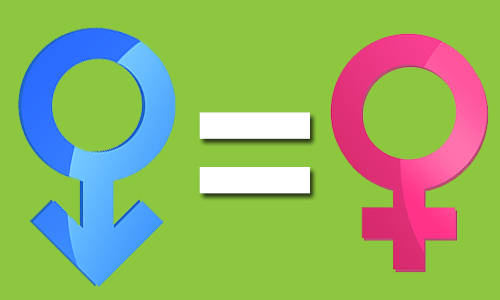
Denmark, along with other Nordic countries, has been holding top position in a gender equality rankings. These countries not only are trying to raise equality for women, but for both genders through equal maternity/paternity benefits. There are mandatory benefits for both maternity and paternity leave. "This concept illustrates efforts for true gender equality rather than a one-sided effort to bolster women’s standings within society." (http://www.equalityforher.com/) Laws in Denmark guarantee equal pay for equal work, and women have and use a legal recourse if they feel discriminated against. 
http://www.equalityforher.com/

Women hold all of the Danish government's top jobs, with no men being head of the parties in the government. After 2013 Danish government requires big companies to set an aim for how many women they want to have in management. These companies also have to develop plans on how to get more women into the leadership. However, companies are not obligated to take any actions in this direction. Danish industry opposes quotas, and thinks that new rules will result with better gender equality rates through voluntary means. "The government does expect, however, that because companies are asked to highlight what they are doing to further gender equality, those who do nothing will be exposed and this will motivate more to take action to get more women into leadership positions." (http://www.nordiclabourjournal.org/)
http://commoncausezambia.org/
Gender inequality, however, is not only applies to women population. Denmark also is currently trying to solve a problems men in the country are facing.
Men have lower education, suffer from more lifestyle illnesses and struggle more during a divorce or their spouse's death. Government cooperated closely with local authorities and others to focus on the challenges met by men and boys and try to find a solution.

http://www.posterfortomorrow.org/
"The government also wants municipalities to better adapt their public services to reflect that the two sexes do not always have the same needs and do not always behave in the same way." (http://www.nordiclabourjournal.org/)

There are four main acts focusing on gender equality: 
  • Act on Equal Pay (2006, first introduced in 1973);
  • Equal Treatment Act (2006);
  • Act on Gender Equality (2002));
  • Act on Equal Treatment of Women and Men in the Occupational Social Security Schemes (1998).

Saturday, May 9, 2015

Education for all

http://pub.uvm.dk


In Denmark, education is one of  country's priorities. Danish educational system is designed to promote creativity, analytical and critical thinking and innovation. According to the Official Website of Denmark, basic education in the country is a requirement, and "general upper secondary school primarily prepares the young people for higher education, while 
vocational education and training primarily aims to prepare students for a career in trade or industry". More than 50% of upper secondary school graduates are entering a higher education.  

StudyinDenmark is one of the major resources of Danish education. "Before starting pre-school most children in Denmark benefit from day-care services such as nurseries and kindergarten. Pre-school, which is optional, is followed by nine years of compulsory education in primary and lower secondary school. There is an optional tenth form. The upper secondary education system includes a range of opportunities. Academic programs allow students to apply for entry to higher education. Vocational programs are aimed at direct entry to the labor market", website says, explaining the levels of education in the country. 

http://studyindenmark.dk/
Danish higher education combines innovative teaching techniques, research and academic excellence. In Denmark students are given an opportunity to enter many internship programs  in internationally recognized organizations. Institutions are highly international, and offer a large number of programs and courses in English. "A recent survey with responses from more than 3,500 international students studying in Denmark showed that 78% of the students would recommend Denmark as a study destination and 93% consider Denmark to be a safe country to live in" (http://studyindenmark.dk/).

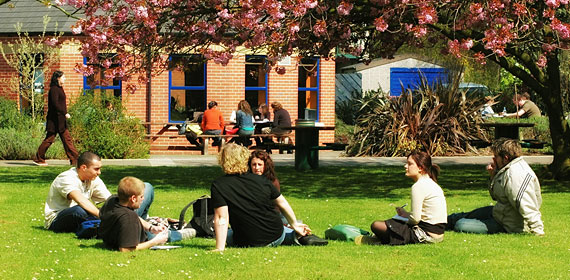
Danish educational system strive to ensure the all young people are getting knowledge, which will allow them to be demanded on global labor market. It is mostly state financed, and all public educational institutions are approved and evaluated. Students right to have their own opinion is another thing, contributing to Danish education.
http://scandinavianstudy.com/

Facts & figures (http://ufm.dk/)

  • Population: 5.4 million (2010)
  • Percentage of a year group completing a youth education programme: 84.4 % (2009)
  • Percentage of a year group completing a higher education programme: 46.6 % (2009)
  • Approximately 55 % of those completing a higher education programme are women (2010)
  • Percentage of total national expenditure spent on education (incl. SU grants): 15.6 % (2009)

Sunday, May 3, 2015

Happiest people in the world

http://www.happinessresearchinstitute.com/
According to Sustainable Development Solutions Network's 2013 report on the World Happiness, the happiest people live in Denmark. Denmark, where it is sunny only 36.6% of a daylight hours, and cloudy other 63.4% of the time (climatems.com). So, how is it possible, that citizens of cold and harsh northern country are remain to take over the very first place in the happiest people "contest"?
http://www.visitdenmark.co.uk/ says that it is all about the work-life balance. People in Denmark work 37 hours a week, and have more then 5 weeks of holidays during the year. "This means that leisure time is a huge part of the Danish culture, which is optimised in a great number of ways, let it be social gatherings, sports, taking a course, or joining the local book or theatre club", website says. Social activities and impovised "get-together" with others are named "hygge", which means a cosy intimate meeting with family and friends. 
http://eurotaxi.mobi/
Another  reason Danes are the happiest people in the world is an advanced social development of the country. Denmark was one of the first countries to establish social services. "Social welfare programs include health insurance, health and hospital services, insurance for occupational injuries, unemployment insurance and employment exchange services, old age and disability pensions, rehabilitation and nursing homes, family welfare subsidies, general public welfare, and payments for military accidents. Maternity benefits are payable up to 52 weeks (http://www.nationsencyclopedia.com). Danish government's spending on children and elderly is higher than any other country. Denmark gives its people sense of security, and makes sure that if they get unemployed or ill, government will help them get back on their feet.
With all these incredible social features and beautiful nature of the north around, no surprise they are the happiest people in the world. 

Saturday, April 18, 2015

Three Thematic Maps

Just to start, I want to share three thematic maps of Denmark.

thematic map is a type of map especially designed to show a particular theme connected with a specific geographic area

Solar district heating map

Map indicates the areas of existing and planned solar district heating plants.

http://www.solar-district-heating.eu

Wind Power Map

Map indicates locations of wind turbine fields.
http://cdn.energytribune.com


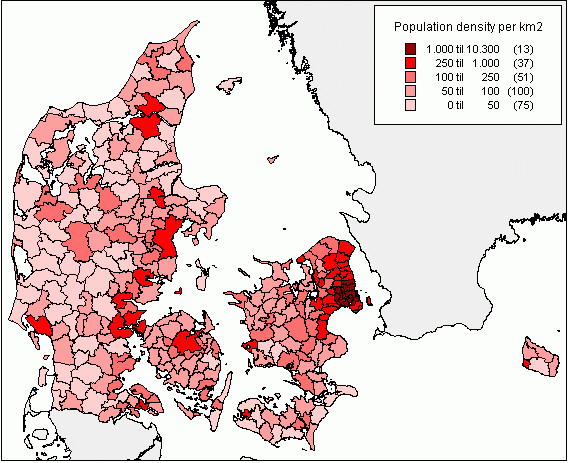
Population Density Map

Map indicates population density per km2
http://www.vasab.leontief.net